

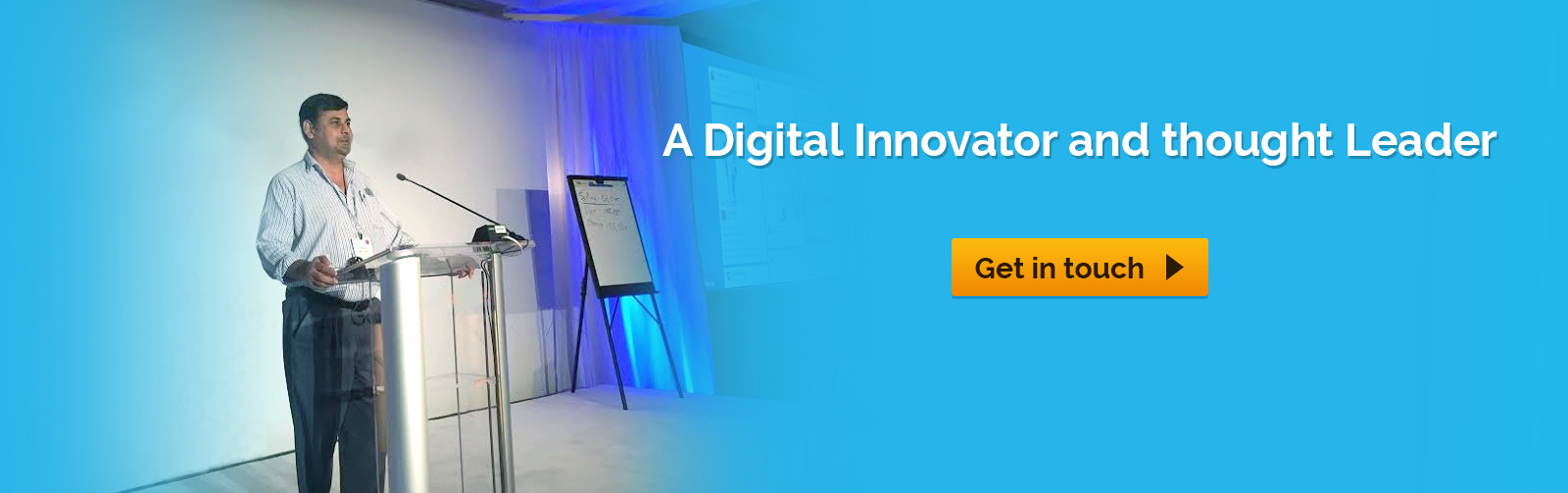


I have been running U.S.-India delivery operations since the early 2000’s.
That means 25 years of early morning calls, missed deadlines, rework conversations, client escalations, and margin reviews that didn’t add up. And one slow, hard realization: most of what goes wrong in offshore delivery has nothing to do with India.
The friction is rarely an India problem. It is almost always a governance problem.
And governance is fixable.
What I Have Seen Repeatedly
The pattern is consistent regardless of company size — whether it’s a boutique Web Application Development shop in Los Angeles, an ERP Consulting firm in Plano, or a large enterprise running a 500-person delivery center in Hyderabad.
It starts with a promising premise. India offers skilled, talented professionals at a labor cost that makes the business model work. The arbitrage is real. The talent is real.
Then execution begins. And somewhere between the U.S. client-facing team and the India delivery team, things break down:
- Requirements get lost in translation — not language, but context
- Scope creep goes undocumented because nobody owns change control
- Rework happens quietly, absorbing margin never budgeted for it
- Quality issues surface at delivery, not during execution — too late to fix cheaply
- The founder becomes the de facto bridge between both teams, firefighting instead of growing the business
- SOPs exist on paper or not at all
- Escalation paths are unclear, so everything escalates to the top
- Offshore managers lack the authority or structure to make decisions
The result: eroded margins, frustrated clients, burned-out leaders, and a creeping belief that “India just doesn’t get it.”
That belief is wrong. And expensive.
What Is Actually Happening
Five root causes show up in almost every engagement:
1. The operating model was never built — it was inherited. Most companies set up their India delivery organically. A founder hires a few engineers. Don’t feel bad. I did that too. But it works. They hire more. Before long, there are 50, 100 people in India, and the operating model is still whatever the founder figured out in year one. It was never designed. It was accumulated.
2. Accountability stops at the water’s edge. U.S. teams own client relationships. India team’s own task completion. Nobody owns the handoff between them. That gap is where margin goes to die.
3. SOPs are aspirational, not operational. Every company has some version of a process document. Very few have processes that are actually followed and enforced. The SOP exists to satisfy an audit — not to guide daily execution.
4. Change control is informal or nonexistent. Scope creep is the single biggest margin killer in delivery. When changes happen through Slack/Discord/Google Talk messages or verbal agreements, they become invisible costs. By the time a project closes, the team has delivered 30% more than what was sold — and absorbed that cost internally.
5. The offshore team is executing, not thinking. When offshore teams are treated as execution capacity rather than delivery partners, they optimize for task completion rather than outcome quality. They do exactly what they are told — nothing more. In complex delivery, that is a recipe for rework.
What Actually Fixes It
The solution is not better talent, more oversight, or a different city. It is an operating discipline applied to the gap between strategy and delivery:
Delivery governance — clear ownership of what gets built, by whom, by when, and what changes cost. An accountability structure, not a project management tool.
Change control — every scope change is documented, priced, and approved before work begins. This alone can recover 10–20% of margin leakage in a typical engagement.
Escalation paths — offshore managers need to know what they can decide, what needs U.S. involvement, and what goes to the top. Without this, everything escalates, and nothing moves.
Onshore-offshore cadence — structured communication rhythms that give both teams context without creating bottlenecks.
Manager accountability — offshore leads developed as genuine managers with decision-making clarity, not just senior task executors.
Playbooks — practical, role-specific guides for the situations that come up most often. Not 50-page documents nobody reads.
The Opportunity Being Left on the Table
India delivery done with proper operating discipline is not just a cost play — it is a competitive advantage.
When rework drops, margin holds, and clients notice consistent quality, you have built something that competitors still fighting this friction cannot easily replicate. The talent is there. The cost advantage is there. What most companies are missing is the operating layer that makes both work reliably.
That layer is buildable. I have built it. I have lived the friction on both sides of it for 25 years.
A Final Thought
If you recognize any of what I have described — the rework, the margin erosion, the escalation fatigue — this is not your team’s fault and it is not India’s fault.
It is a solvable operating problem.
And the companies that solve it first will outperform the ones still blaming the time zone.
Originally published on LinkedIn by the same author